Future-proof furniture
The climate impact of furniture is largely determined by how it’s produced, what materials are used, and how long it lasts. These choices are made already in the design stage — meaning that 80 percent of a piece of furniture’s climate impact is decided right there.
The climate impact of furniture is largely determined by how it is produced, the materials used, and its lifespan. These decisions are made already at the design stage. With two in-house factories, Swedese’s product developers are able to continuously refine our products and reduce their environmental footprint.
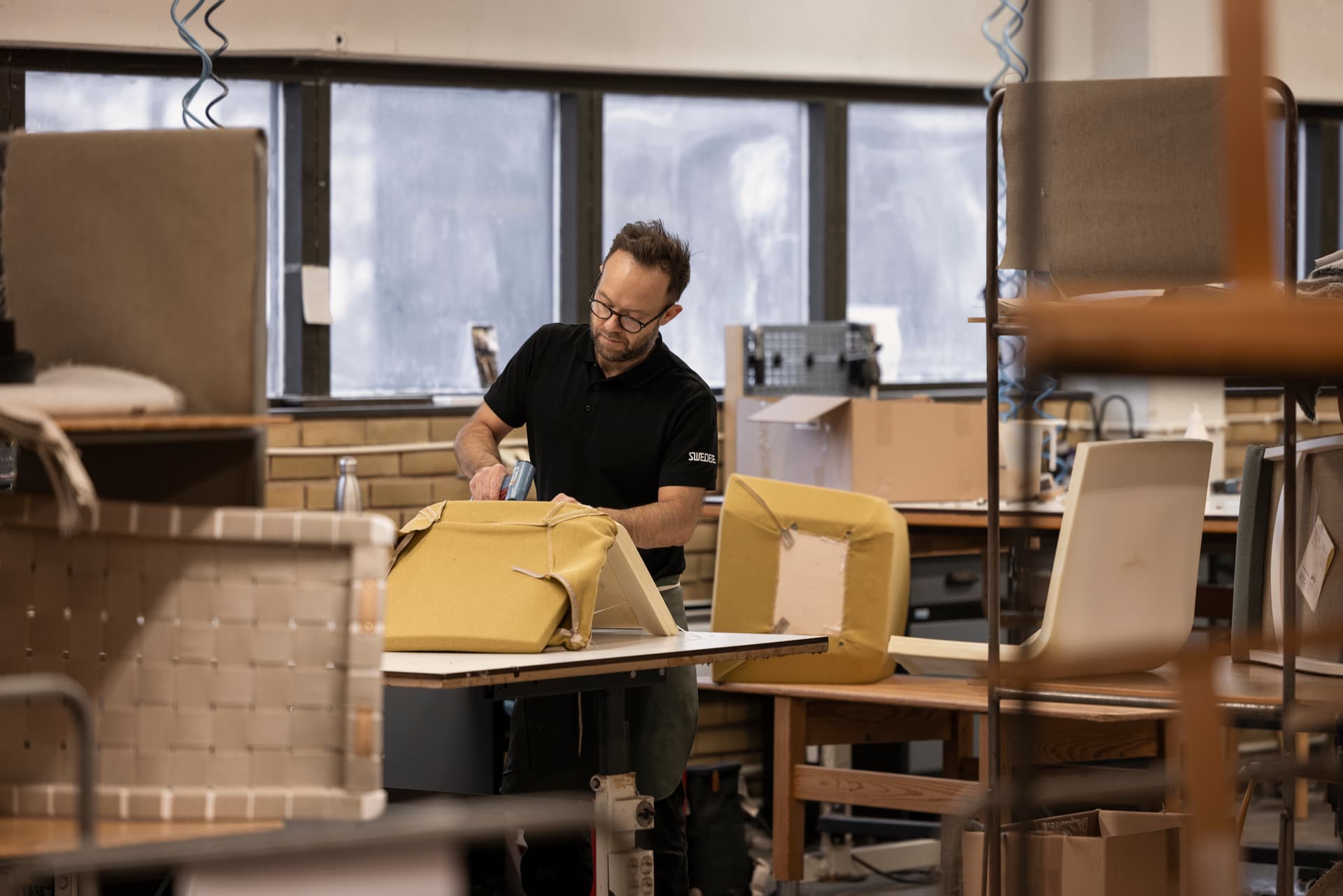
Furniture Renovation
High quality, strong design integrity, and long lifespan have always been central to Swedese. We design our furniture with renovation and recycling in mind. In our product development, we focus on making future refurbishment and material recovery as straightforward as possible.
Today, our design briefs already include the requirement that each piece of furniture must be able to be disassembled and renovated in the future.
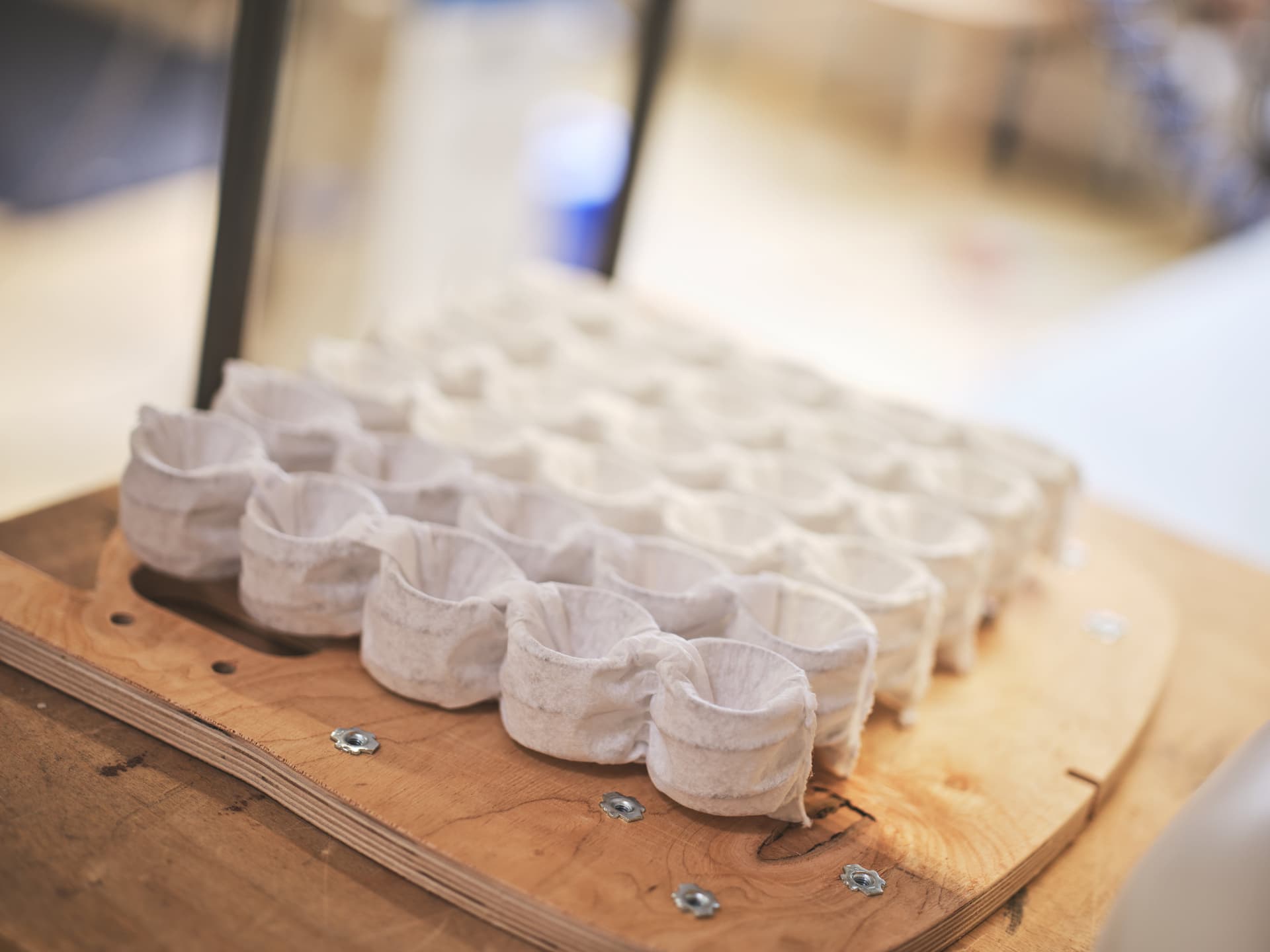
For materials to be recycled efficiently, separability is crucial. We have therefore continuously reduced the use of adhesives where textiles are bonded directly to the polyurethane foam core. Instead, we use solutions such as tacking, zippers, and hook-and-loop fasteners. This makes it easier to separate textiles, padding, and wooden frames during refurbishment and recycling.
In upholstered furniture, it is now common for reinforcing metal to be integrated into the foam core. However, this makes material separation more difficult. The development of molded solutions that allow for separation is therefore an important issue—both for us and for the industry as a whole—in order to facilitate the future recycling of metal and polyurethane.